
Learning How to Choose the Best AI Voice for Each Book Genre starts with the book, not the voice demo. The right narrator should match the story’s tone, pace, emotion, point of view, and dialogue. This guide shows what to listen for before turning a full book into an audiobook.
Why AI Voice Choice Matters for an Audiobook
An audiobook narrator becomes the sound of the book for hours. A voice that feels impressive in a ten-second preview can become tiring, too dramatic, or too flat during a long chapter. That is why voice selection should begin with the listening experience you want to create.
The goal is not to find the most human-sounding demo. It is to find an AI audiobook voice that supports the words without distracting from them. Good narration makes the book easier to follow and gives important moments enough space to land.
Is There One Best AI Voice for Every Book?
No single narrator voice is ideal for every book genre. Voice quality depends on fit. A calm, measured voice can sound excellent in history or biography but may weaken the urgency of an action-heavy scene. A highly expressive narrator may energise fiction yet feel excessive in a technical guide.
This is why genre is a useful starting point rather than a strict rule. Two romance novels can have very different moods. One may be light and funny, while another is quiet and emotional. The narrator should match the individual book as well as the label on its cover.
What Makes an AI Voice Fit a Book Genre?
A strong match usually comes from several qualities working together. Listen beyond whether the voice sounds realistic. Ask how it handles a full paragraph, a pause, a difficult name, a line of dialogue, and a change in emotion.
Tone
Voice tone should support the mood of the book. Warmth may suit an intimate story. Restraint can work well for mystery. A confident, clean tone can help non-fiction feel organised. Tone should guide the listener without telling them how to feel in every sentence.
Pacing
Voice pacing affects tension and comprehension. Fast delivery can add urgency, but constant speed becomes tiring. Slow narration can feel thoughtful, yet too much slowness can drain energy from a scene. The best pacing leaves room for meaning while keeping the book moving.
Emotional Range
Emotional narration matters most when the book changes mood often. Fiction may move from humour to fear to grief within a chapter. The narrator should respond to those shifts without sounding theatrical. Consistent character identity should remain even when emotion changes.
Clarity and Pronunciation
Clarity matters in every audiobook genre. It becomes especially important in science fiction, textbooks, biographies, and specialist non-fiction where names or technical terms may be unfamiliar. A beautiful voice is not useful if listeners regularly misunderstand key words.
Character Range
Books with frequent dialogue need a narrator who can separate speakers clearly. That does not mean every character needs an extreme accent. Small changes in rhythm, energy, pitch, and speaking style can make character voices easier to recognise.
- Listen for a tone that fits the book rather than choosing the most dramatic demo.
- Check whether the pace stays comfortable through both quiet and intense passages.
- Test names, specialist terms, and unusual words for clear pronunciation.
- Use dialogue to judge whether recurring characters remain easy to identify.
- Choose a voice you could comfortably hear for the full length of the audiobook.
Best AI Voice Style by Book Genre
There is no fixed formula for genre narration, but each category creates different listening demands. Use the following qualities as a starting point, then test them against the actual manuscript.
Romance
Romance often benefits from warmth, intimacy, and flexible emotion. The voice should handle quiet conversations as naturally as stronger emotional scenes. Avoid choosing a narrator only because the voice sounds soft; dialogue chemistry, timing, and believable emotion matter more.
Fantasy
Fantasy may ask more from an audiobook narrator because it can contain large casts, invented names, unfamiliar places, and long descriptive sections. Look for clarity, stamina, expressive range, and consistent character voices.
Mystery
Mystery usually works well with controlled delivery. The narrator needs enough atmosphere to hold attention without signalling every clue through exaggerated emphasis. Clear dialogue is important because conversations may contain details the listener needs to remember later.
Thriller
Thrillers need momentum. Look for a voice that can increase energy during urgent scenes while remaining understandable. Constantly fast narration is not the answer; contrast between calm and intense moments is what makes tension noticeable.
Horror
Horror does not automatically require a deep or frightening voice. Atmosphere often comes from timing, restraint, silence, and gradual changes in intensity. A forced “scary” performance can make serious scenes feel artificial.
Choose an AI audiobook voice that can stay calm when the writing is calm and become more tense when the scene earns it. That contrast lets the text create fear instead of relying on a vocal effect.
Science Fiction
Science fiction may combine action, technical vocabulary, invented terminology, and unfamiliar names. Prioritise pronunciation and clarity alongside expressive range. A futuristic-sounding voice is not required unless it genuinely suits the book.
Children's Books
Children's narration often benefits from friendly energy, clear pronunciation, and expressive rhythm. The voice should make the story inviting without becoming noisy or exaggerated. Age range matters too: a picture-book style may feel wrong for an older middle-grade story.
Memoirs and Biographies
Memoirs often need a personal, reflective quality. A narrator who sounds too polished or theatrical may create distance from intimate material. Biography can be more measured, but it should still feel engaging across long factual passages.
Business and Self-Help
Business and self-help books usually benefit from a confident, clear, low-distraction narration style. The listener should be able to follow frameworks, examples, and practical advice without fighting against dramatic delivery.
Textbooks and Educational Books
For educational content, intelligibility comes first. Choose a narrator voice with clear pronunciation, steady rhythm, and comfortable pauses. Technical terms, numbers, definitions, and headings should remain easy to understand.
Textbooks may also contain charts, formulas, and visual material that narration cannot fully replace. The voice should support study rather than pretend every part of a textbook works equally well as audio.
- Romance: warm, conversational, and emotionally flexible.
- Fantasy: expressive, consistent, and capable of clear character separation.
- Thriller and mystery: controlled pacing with enough range to build tension.
- Non-fiction and education: clear, steady, and easy to understand for long sessions.
- Children’s books: lively and friendly without sacrificing pronunciation or clarity.
Why the Most Realistic AI Voice Is Not Always the Best
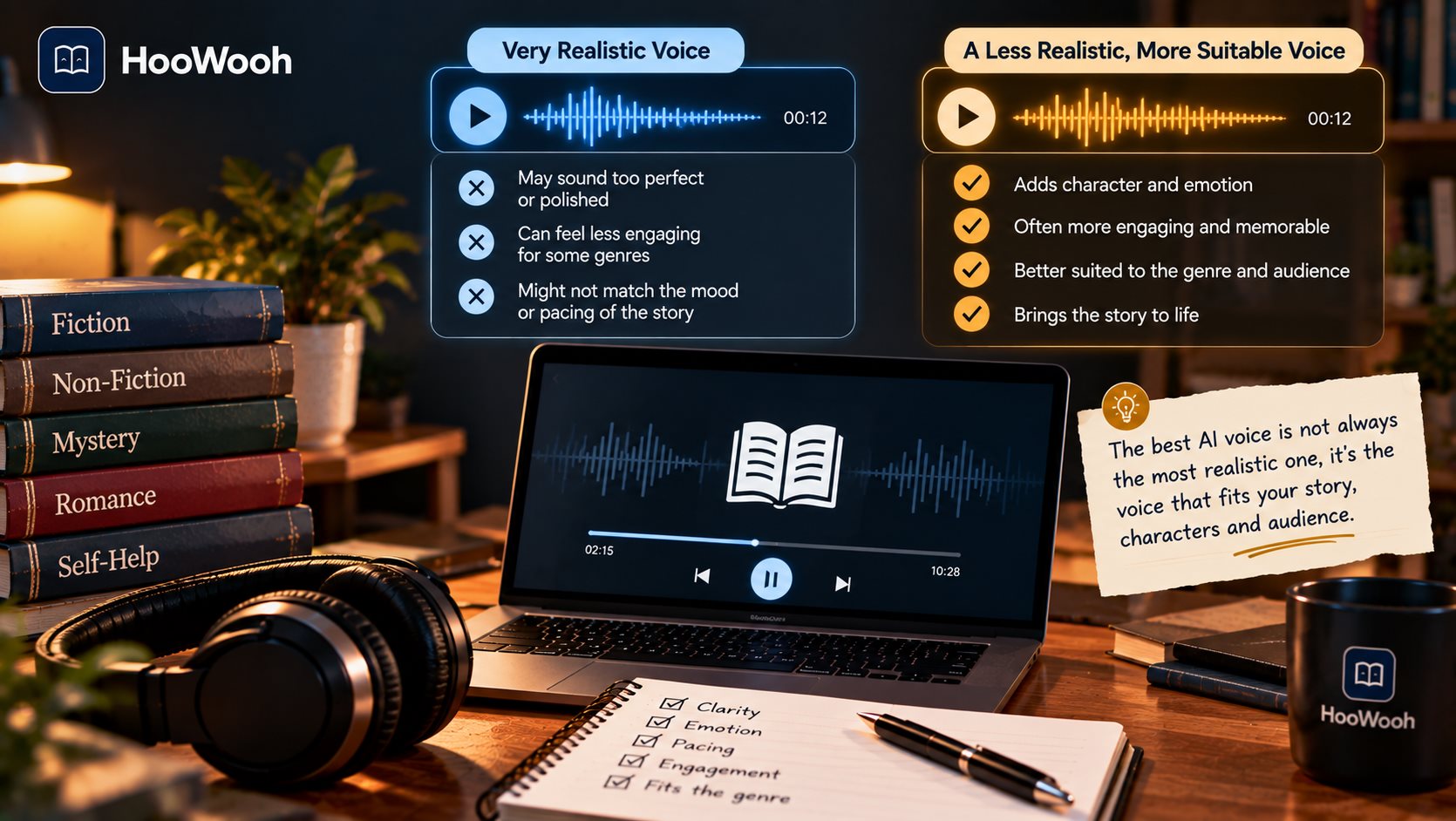
Realism is only one part of good AI narration. A voice can sound almost human and still be a poor match for the manuscript. If it pauses in strange places, stresses the wrong words, or uses the same emotion for every scene, the result may feel less natural over time.
Genre fit matters because narration has a job. It guides attention, supports mood, separates dialogue, and helps listeners understand the writing. A technically realistic voice that fights the story can be less effective than a simpler voice with better timing and tone.
This is why you should judge a narrator using complete passages rather than isolated sentences. Long-form listening exposes habits that short demos can hide.
Should the AI Voice Match the Book's Point of View?
Point of view can change how close the narration feels. First-person writing often sounds more personal because the narrator speaks as “I.” A conversational voice may suit that closeness. Third-person narration can allow more distance, although the exact style depends on the book.
The narrator does not have to sound exactly like the main character in every case. What matters is whether the voice supports the perspective. A reflective first-person memoir and a comic first-person fantasy novel may need completely different deliveries.
Before making a final voice selection, test a passage where the point of view is especially clear. Ask whether the narration feels naturally connected to the words.
Should Narrator Gender Match the Main Character?
Not automatically. Narrator gender alone does not decide whether an audiobook works. Point of view, authorial style, setting, character range, tone, and listener expectations can all matter more.
A single narrator may perform characters of different genders through subtle changes in delivery. Multi-character narration may use separate voices when stronger separation helps the story. Avoid choosing a voice only from a gender label without listening to how it handles the manuscript.
Does Accent Matter When Choosing an AI Audiobook Voice?
Accent can support setting or character identity, but it should not be added simply to make narration sound interesting. An accent that does not fit the text can become distracting, especially across a long book.
Consistency also matters. If the selected voice changes pronunciation or accent strength between chapters, listeners may notice the production instead of the story. Test place names, character names, and dialogue before committing to a full audiobook.
Single Voice or Multi-Character Voices for Fiction?
A single narrator can create a unified listening experience and still use subtle changes for dialogue. This works well when the prose has a strong narrative voice or when the cast is small. It can also keep the production calm and consistent.
Multi-character narration can help when a novel has frequent conversations or a large recurring cast. Different voice profiles make speakers easier to identify, but they need to stay consistent. Too many dramatic voices can make the audiobook feel crowded.
For more detail on this approach, read Hoowooh’s guide to multi-character audiobook voices and use the same principle when testing fiction: clarity matters more than simply adding more voices.
How Emotion Should Change Across Different Genres
Emotion should follow the scene, not a fixed genre stereotype. Romance is not always soft. Horror is not always tense. Self-help is not always cheerful. A strong narration style leaves room for the book to change mood.
The core narrator voice should remain recognisable while intensity changes. This is especially important for character dialogue. A character may whisper, joke, argue, or cry without suddenly sounding like a different person.
Hoowooh describes AI audiobook generation with context-aware narration features designed to make long-form audio more expressive. When comparing voices, test whether the delivery changes naturally with the scene rather than applying the same emotion everywhere.
How to Test an AI Voice Before Narrating the Whole Book
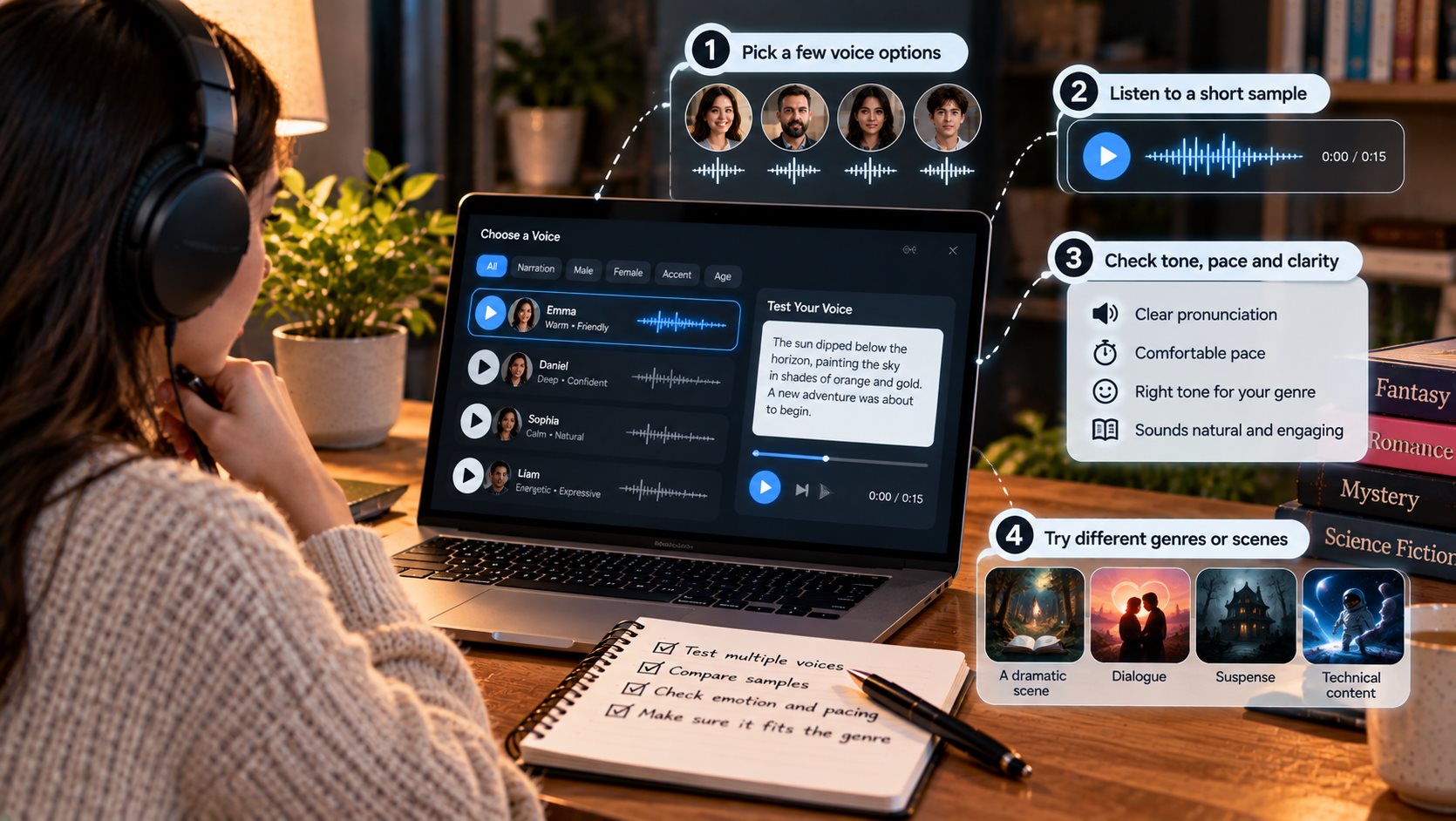
Never choose a long-form narrator from one perfect sentence. Build a short test that represents the real book. For fiction, include ordinary narration, a conversation, and an emotional or high-energy moment. For non-fiction, include explanation, specialist vocabulary, and a dense paragraph.
Listen with headphones and, if possible, through the device you normally use for audiobooks. A voice that sounds good through laptop speakers may feel sharper or more tiring during longer listening.
Give the sample several minutes. Repeated intonation, unnatural pauses, and pronunciation habits often become obvious only after the first minute.
- Test normal narration to hear the voice at its everyday pace.
- Test dialogue to check speaker separation and conversational timing.
- Test an emotional scene to see whether expression feels natural rather than forced.
- Test difficult names or technical terms before generating hours of audio.
- Listen for several minutes and ask whether the voice remains comfortable over time.
What Makes an AI Audiobook Voice Sound Wrong?
A poor match is not always obvious at first. The voice may be clear but emotionally flat. It may sound expressive but place emphasis on unimportant words. It may pronounce names correctly once and differently later. These small issues become more noticeable in a long audiobook.
Another warning sign is constant intensity. If every sentence sounds dramatic, important scenes lose contrast. If every sentence is calm, tension disappears. Good AI narration needs variation while keeping the narrator identity stable.
Finally, watch for listener fatigue. A very bright, breathy, slow, or forceful voice may be attractive in a short preview but tiring after an hour. Comfort is part of voice quality.
How to Choose an AI Voice With Hoowooh
Hoowooh is built around turning supported books and documents into listenable audio. When selecting a voice, start with the genre, then test how the narration handles the actual writing rather than choosing from the voice label alone.
For fiction, pay attention to dialogue, character consistency, and emotional changes. For non-fiction, focus on clarity, pronunciation, and pacing. If the book moves between very different types of scenes, choose a voice with enough range to handle those changes without losing its identity.
Frequently asked questions
What is the best AI voice for audiobooks? There is no single best AI voice for audiobooks. The strongest choice is the voice that fits the book’s tone, pace, point of view, vocabulary, dialogue, and emotional range. Always test the voice with real passages from the manuscript.
Which AI voice is best for fiction books? Fiction usually benefits from a natural AI voice with good emotional range and clear dialogue. Books with large casts may also benefit from character voices or multi-character narration, while quieter fiction may work well with one consistent narrator.
Should the narrator’s gender match the main character? It does not have to. Narrator gender is only one factor. The voice should fit the point of view, tone, setting, characters, and overall narration style. Listen to the actual manuscript before deciding.
Can I use different AI voices for different characters? Yes, when the audiobook system supports multi-character narration. Different voices can make dialogue easier to follow, especially in books with recurring speakers. Keep the differences clear but natural and make sure each character stays consistent across chapters.
How do I test an AI voice before converting my whole book? Create a short sample using normal narration, dialogue, and a scene with stronger emotion. Add difficult names or technical terms if the book contains them. Listen for several minutes to judge comfort, pacing, pronunciation, and repeated vocal habits.
Conclusion
Knowing How to Choose the Best AI Voice for Each Book Genre means looking beyond a polished demo. The right AI audiobook voice should fit the book’s tone, pacing, point of view, emotional range, vocabulary, and dialogue. Genre helps narrow the options, but the manuscript should make the final decision.
Test real passages before generating the full audiobook, and choose a voice you can comfortably hear for hours. If you are ready to explore AI narration for your own book, visit Hoowooh and compare narration choices with the story, reader, and listening experience in mind.